
Cybersecurity is the practice of protecting computers, networks, devices, and data from cyber threats and attacks, including hacking, phishing, ransomware, malware, and unauthorized access. It helps organizations and individuals keep their digital information safe and secure.
Think of cybersecurity as a digital shield that protects your online accounts, personal data, and business information from cybercriminals and online threats.
Table of Contents
ToggleCyber Security Examples
• Set up two-factor authentication (2FA)
• Blocking threats using firewalls
• How to protect against phishing emails
• Antivirus software installation
• Encrypt confidential data
• Protecting web banking transactions
• Maintaining software updates
• The Use of VPNs for Secure Surfing
• Securing data in the cloud
In simple words: Have you ever noticed that whenever you log into your bank account , your bank sends you an OTP? That is the cyber security in action, helping to ensure that only you can access your account.
Types of Cyber Security
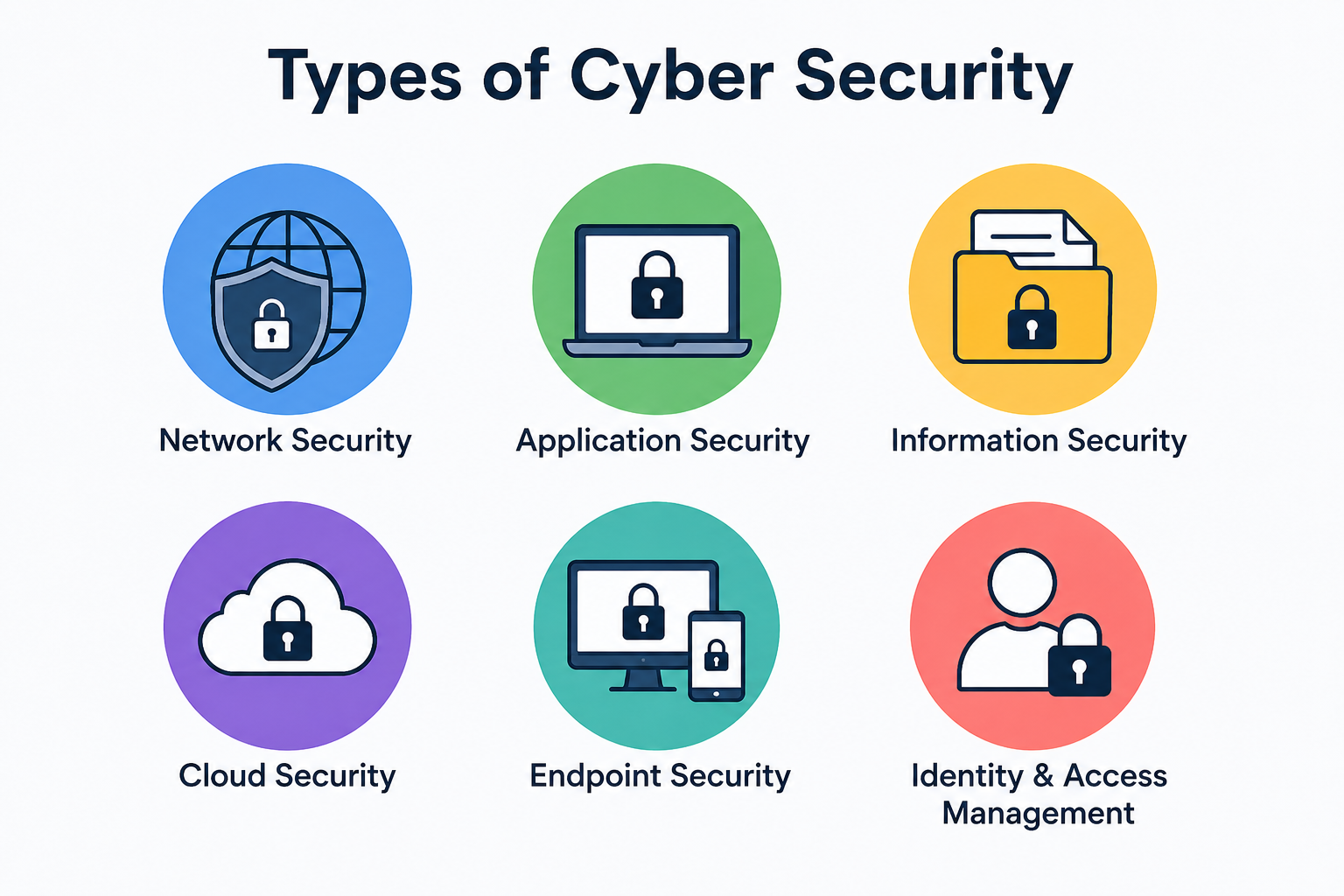
1. Application Security
Focuses on securing applications and software from vulnerabilities and attacks.
2. Network Security
Protects computer networks from cyber threats and unauthorized access.
3. Information Security
Secures sensitive data from theft, modification, and unauthorized access.
4. Cloud Security
Safeguards data, applications, and services hosted in the cloud.
5. Endpoint Security
Protects devices such as desktops, laptops, and mobile phones from cyber attacks.
6. Identity and Access Management (IAM)
Ensures that the right people get access to the right resources at the right time.
Why Is Cyber Security Important?
• Prevents cyber attacks and security breaches
• Protects sensitive data from theft
• Ensures secure online transactions
• Safeguards personal and business information
• Maintains privacy and trust in digital systems
Final Thoughts
In a world where almost every activity is connected to technology, cyber security plays a vital role in maintaining trust, privacy, and safety online. As cyber threats become more sophisticated, understanding the fundamentals of cyber security helps individuals and organizations make informed decisions to protect their digital assets. Ultimately, cybersecurity is not just about preventing attacks – it’s about creating a secure digital environment where innovation and connectivity can thrive. For those interested in learning more, cybersecurity courses and cybersecurity training in Hyderabad can provide valuable knowledge and practical insights into this rapidly growing field.
Frequently Asked Questions (FAQs)
1. What is cyber security?
Cyber security is the practice of protecting computers, networks, devices, and data from cyber attacks, malware, phishing, and unauthorized access.
2. Why is cyber security important?
Cyber security helps protect sensitive information, prevents data breaches, secures online transactions, and maintains privacy and trust in digital systems.
3. What are common cyber security threats?
Common cyber security threats include phishing attacks, malware, ransomware, data breaches, social engineering, and unauthorized access to systems.
4. What are the main types of cyber security?
Cyber security includes application security, network security, information security, cloud security, endpoint security, and identity and access management (IAM).
5. Can non-technical students learn cyber security?
Yes, many cyber security courses are designed for beginners and help non-technical learners build the required skills step by step.